

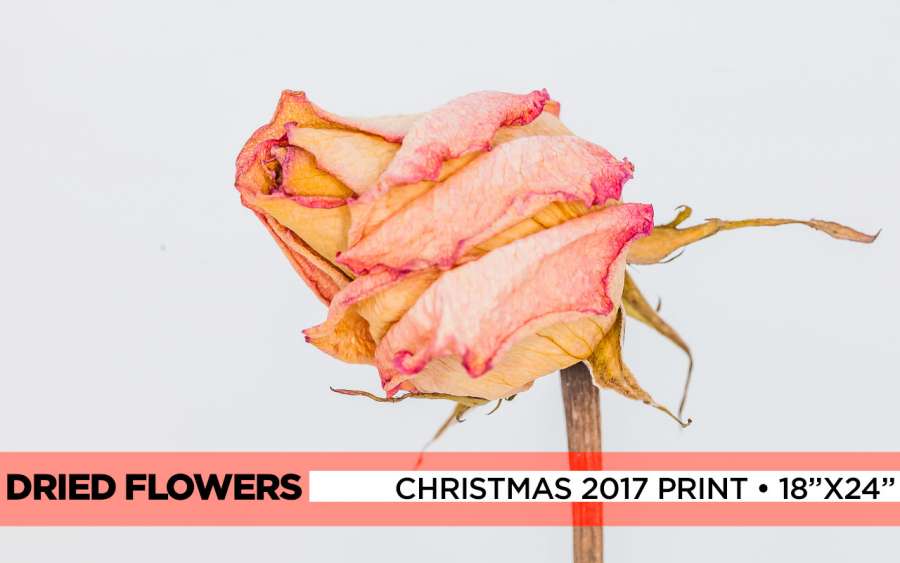
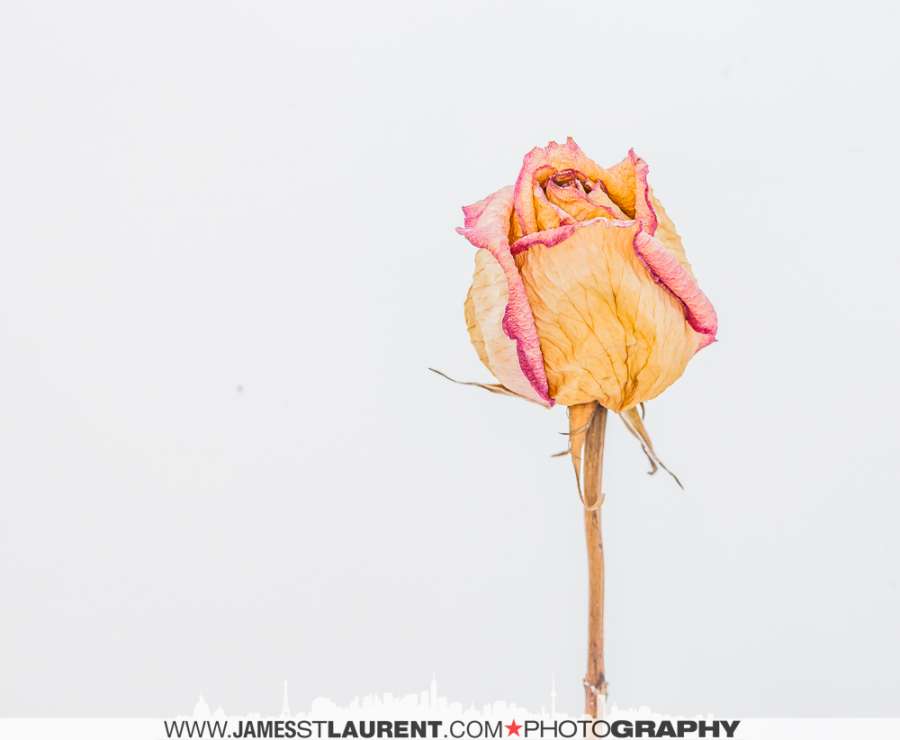
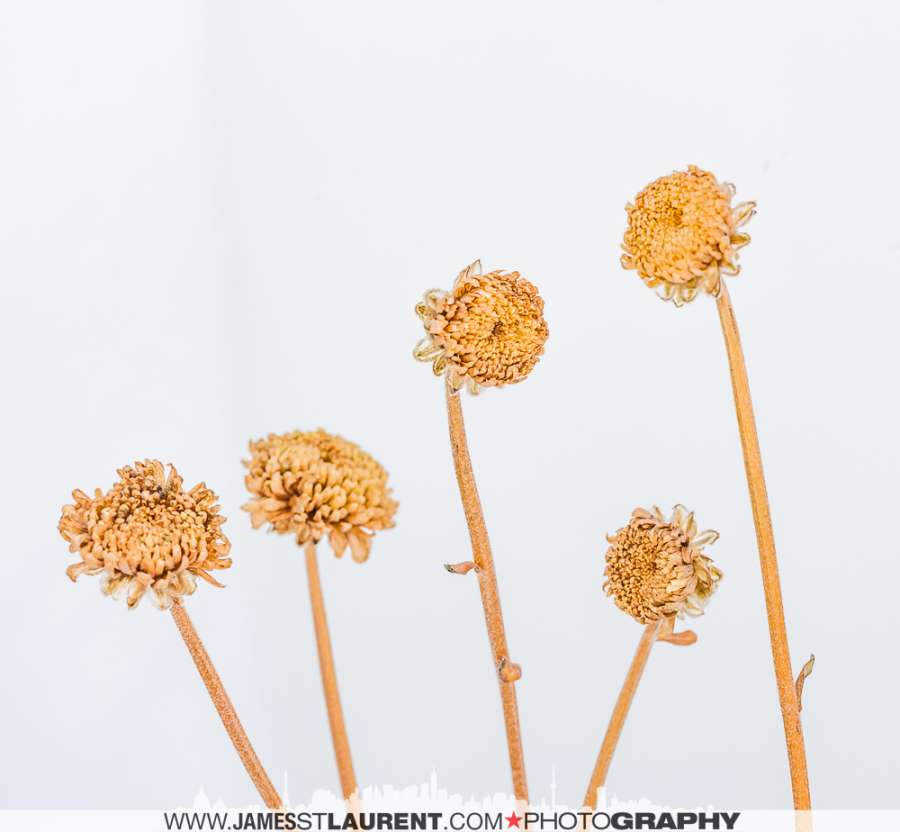
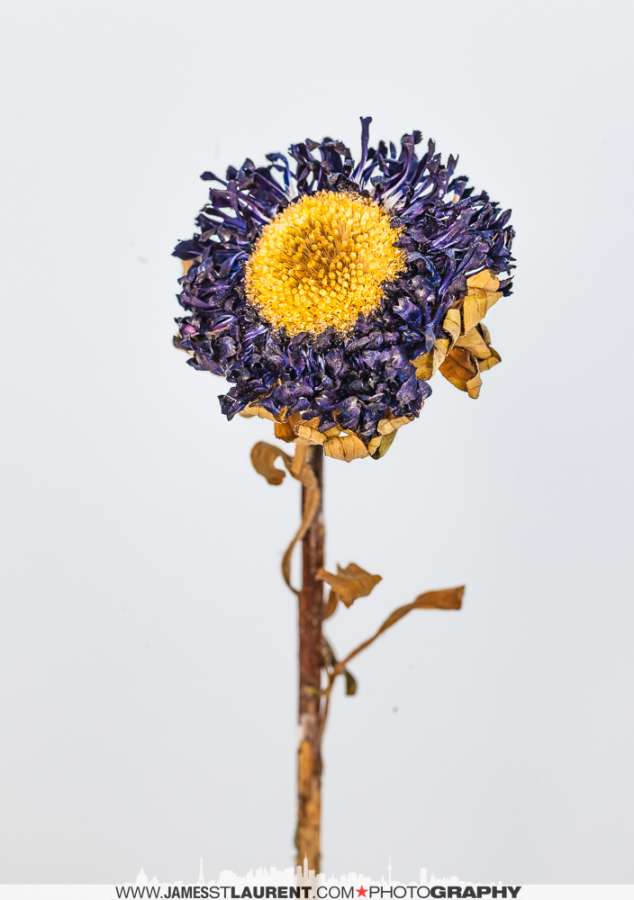
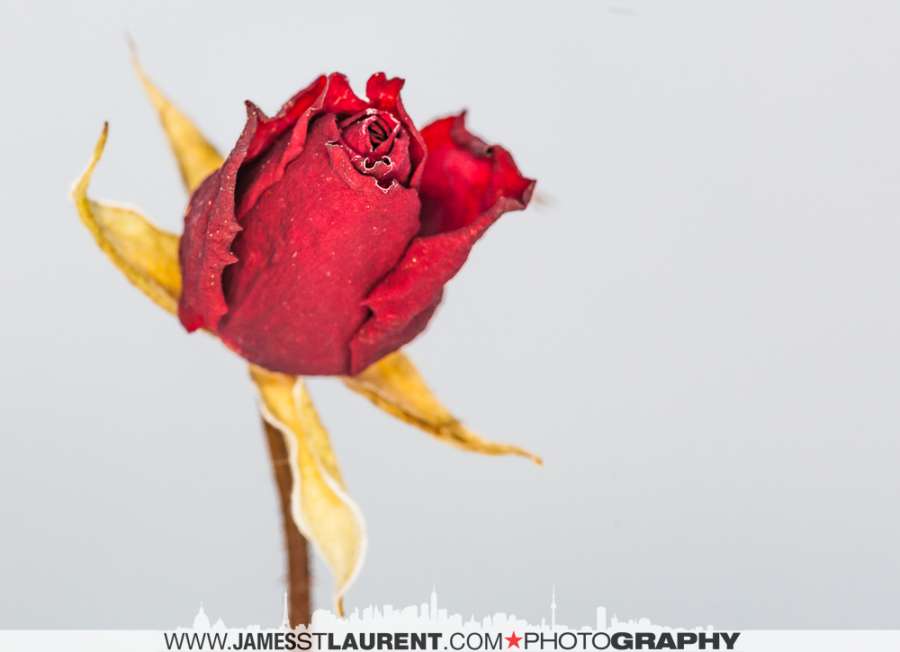
 I’ve produced Christmas prints as gifts for friends for many years and this year I decided to offer the image for purchase. The Christmas 2017 Print is printed 18X24 inch archival paper. The dried flower images I had experimented with in fall were interesting, and seemed to fit in well as the subject for a Holiday image.
Christmas 2017 Print • 18″X24″
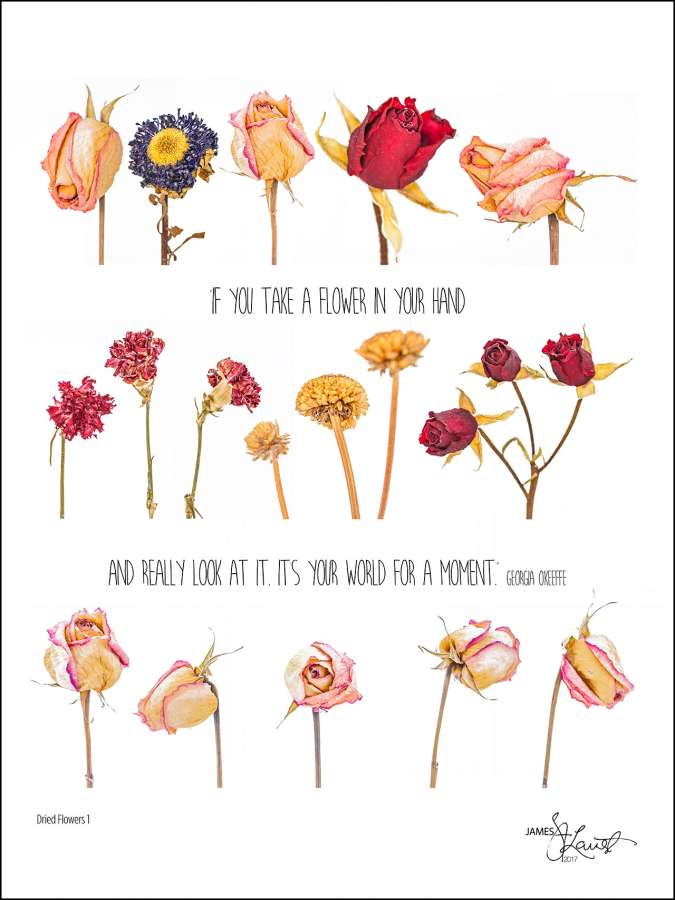
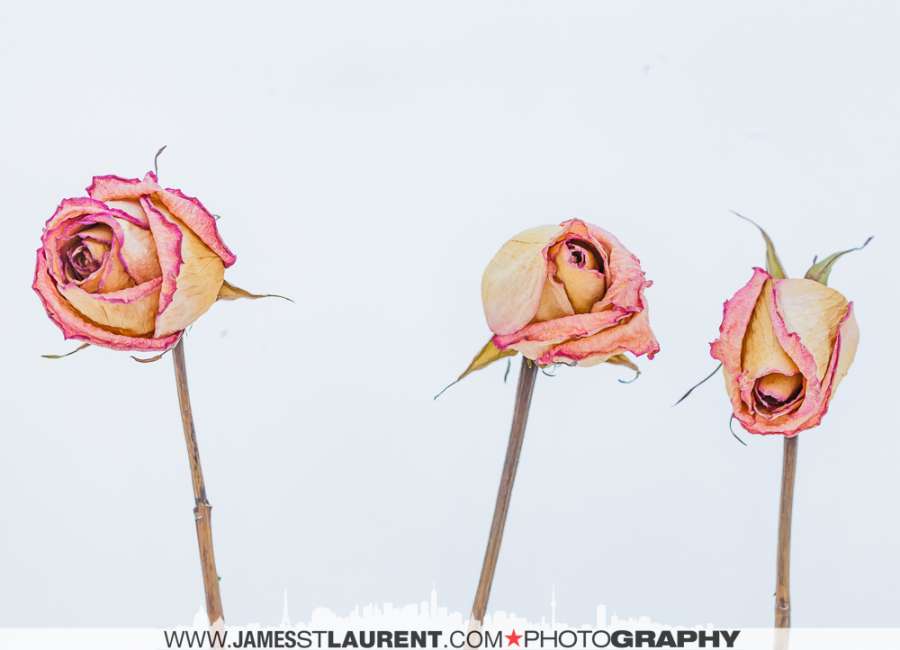
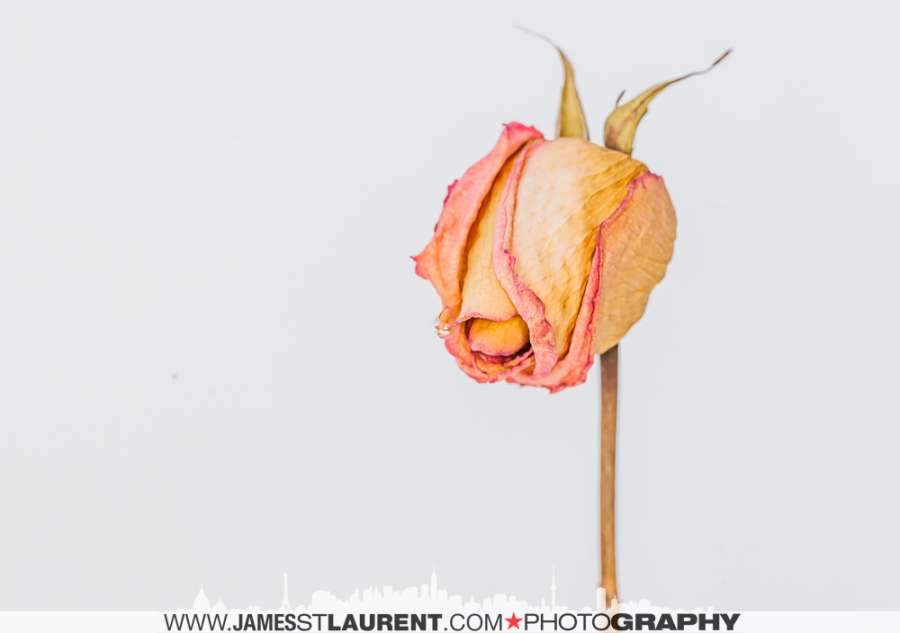
The interest in capturing images of dried flowers was many layered. I took photographs in Prague of the Rose Gardens, once part of the Royal Botanical Gardens and I was intrigued by all the aesthetic and technical issues. A severe storm damaged and destroyed many plants and flowers, which made their fragility more apparent and drawing attention to their short “life” spans. I soon started to see some of the same qualities that Georgia O’Keeffe described.
A flower is relatively small. Everyone has many associations with a flower – the idea of flowers. You put out your hand to touch the flower — lean forward to smell it — maybe touch it with your lips almost without thinking — or give it to someone to please them. Still — in a way — nobody sees a flower — really — it is so small — we haven’t time — and to see takes time, like to have a friend takes time… So I said to myself — I’ll paint what I see — what the flower is to me but I’ll paint it big and they will be surprised into taking time to look at it — I will make even busy New-Yorkers take time to see what I see of flowers… Well — I made you take time to look at what I saw and when you took time to really notice my flower, you hung all your own associations with flowers on my flower and you write about my flower as if I think and see what you think and see of the flower — and I don’t. Georgia O’Keefe
In 1928, Time magazine wrote of her paintings,
“when Georgia O’Keeffe paints flowers, she does not paint fifty flowers stuffed into a dish. On most of her canvases there appeared one gigantic bloom, its huge feathery petals furled into some astonishing pattern of color and shade and line”
[Scroll images across]
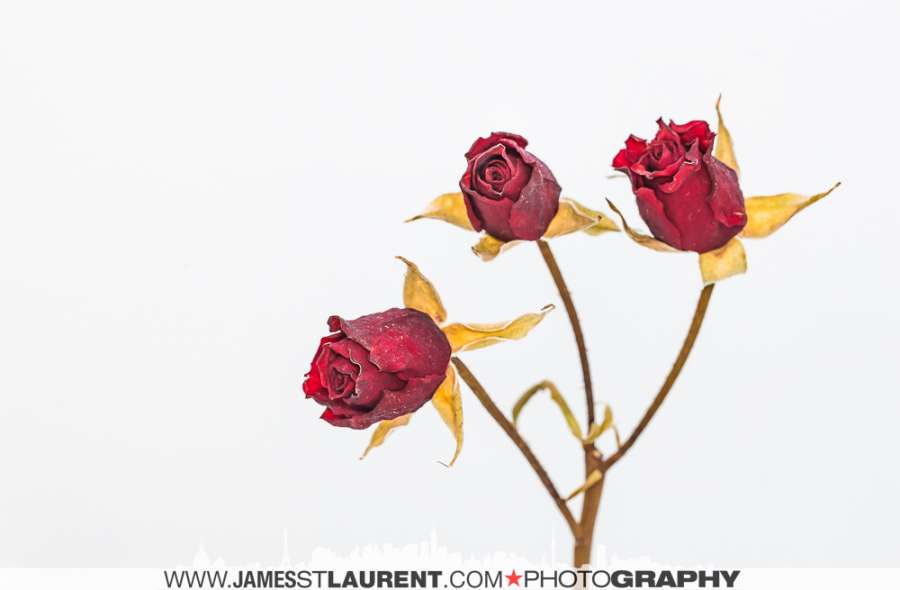
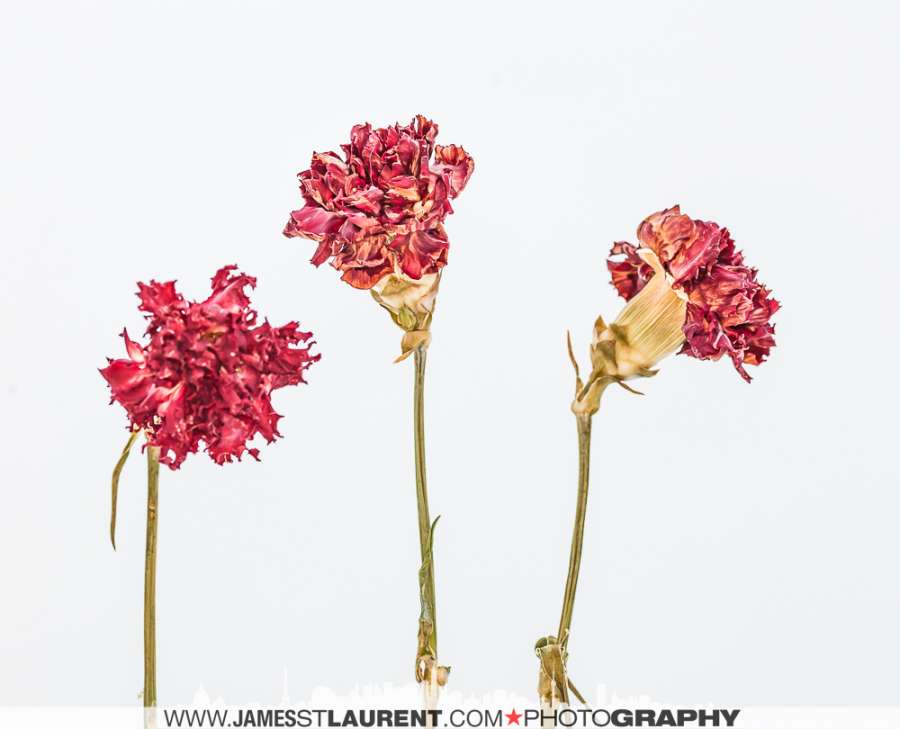
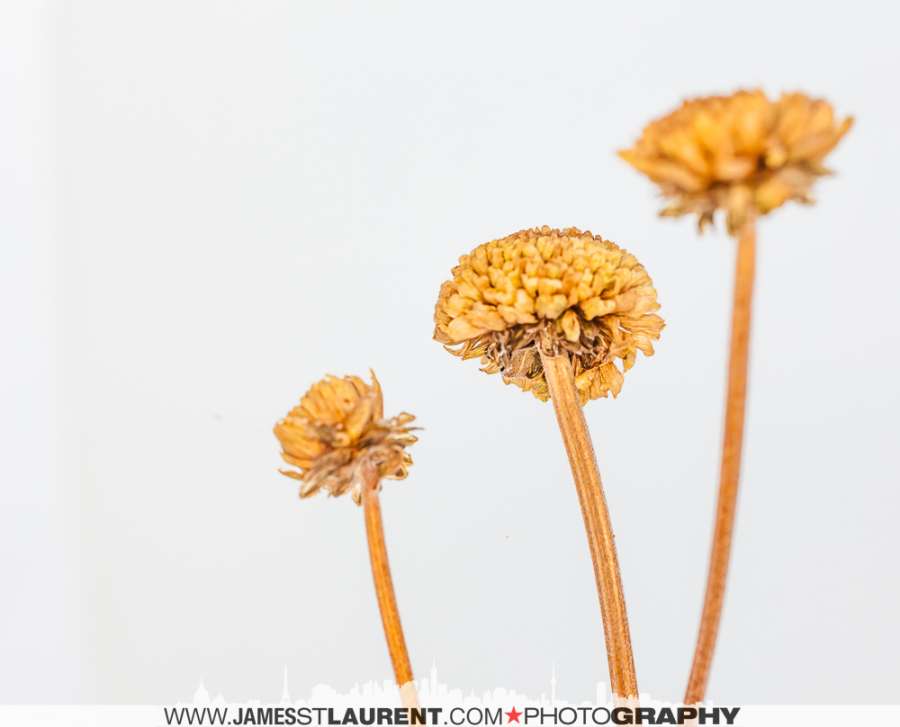
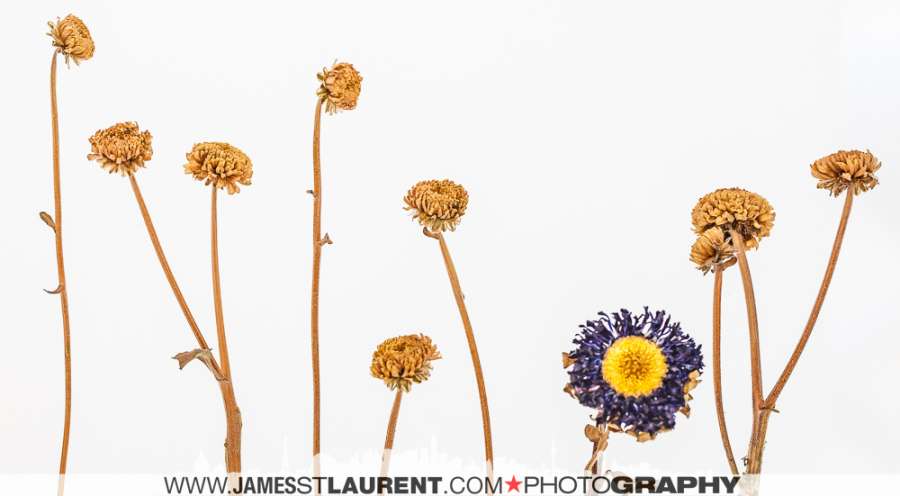
Photographer Alfred Stieglitz, O’Keeffe’s husband, promoted her paintings and first offered up the theory that the paintings represented a woman’s vulva. Tanya Barson, curator at Tate Modern, stated that male art critics perpetuated this assertion. O’Keeffe consistently and vigorously denied the validity of their Freudian interpretations of her art.
Purchase the Image in the Print Store


